
A Bosphorus Dinner Cruise, Hour by Hour
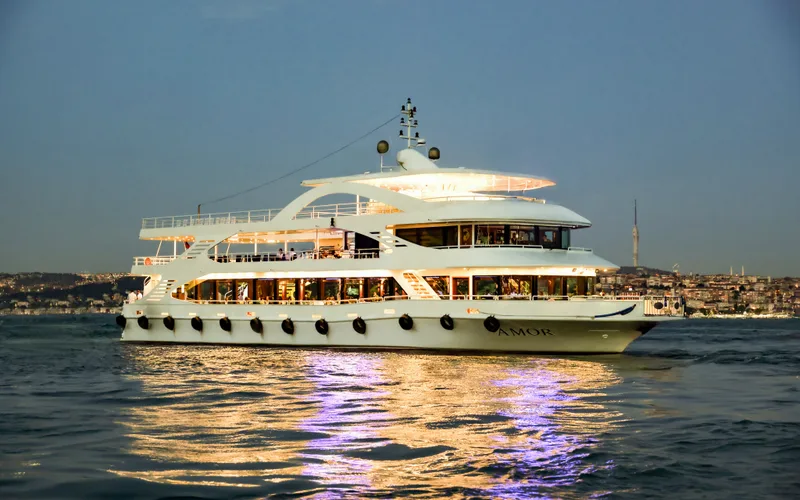
The evening, in order
Most people book a Bosphorus dinner cruise without a clear picture of what three hours on the water actually consist of. This is that picture — the evening in the order it happens, from the walk down to the pier to the moment you step back onto it.
Times are given relative to departure rather than as clock times, because the schedule shifts a little with the season. Your confirmation message has the exact times for your date.
Arriving and Boarding
Boarding opens about an hour before departure, and this hour matters more than people expect. It is the only part of the evening you control: the boat fills gradually, and where you end up sitting is decided here.
The pier is Kabataş, on the European shore. If you booked the hotel transfer, the driver collects you from your lobby and brings you to the pier. If you are coming on your own, the T1 tram and the funicular from Taksim both stop at Kabataş, and the boat is the large lit one at the pier.
At the gangway someone checks your booking — the code from your ticket is enough. Nothing is paid at this point. Payment happens on board, at the end, and no card details are taken beforehand.
Choosing a Table
Tables are not numbered in advance. You walk in, you look, you sit. This is why arriving early is worth it — the first people aboard take the window seats and the tables with a clear line to the stage.
There is a trade-off worth knowing about. Window tables give you the shoreline all evening but put you side-on to the performances. Tables closer to the stage give you the show straight on but less glass. Neither is wrong; it depends on whether you came for the view or for the programme. If you want a guaranteed table near the stage, that can be reserved in advance as an add-on.
The dining rooms are enclosed and heated, so this is not a decision about weather. The open deck upstairs is separate and stays available all evening.
The First Courses
Service starts before the boat moves. The meze plates come out while people are still settling in — ten kinds, brought to the table rather than queued for at a buffet. Soft drinks and water are poured from the start and keep coming all evening; they are included, not counted.
Then the hot starter, and after it the main course you chose when you booked. What each of those is, and what the vegetarian plate contains, is set out course by course here.
The rhythm is deliberate: the food is spaced across the whole three hours rather than served all at once, so that eating and watching do not compete.
Casting Off
The lines come off and the boat pulls away from Kabataş. The first minutes are the ones people photograph most, and for good reason — Dolmabahçe Palace is right there, six hundred metres of lit marble sliding past the window almost immediately after departure.
If you are going to move around the boat at any point in the evening, this is a good moment. The stage is quiet, the deck is not yet crowded, and the light on the water is at its best in the first half hour.
What Goes Past the Window
The route runs up the European shore and comes back down the Asian one. In order: Dolmabahçe, Çırağan, Ortaköy with its mosque right at the waterline under the first bridge, Bebek, Rumeli Hisarı — the fortress Mehmed II built in four months before the conquest — then across to Anadolu Hisarı, Beylerbeyi Palace, Kuzguncuk, Üsküdar, and back to Kabataş.
You pass under the bridges, and that is the part most people are not ready for. They are lit, they change colour, and from directly underneath the scale is different from anything you see from land.
Nobody announces the landmarks over a loudspeaker. If you want to know what you are looking at, it is worth reading the shore in advance — our bridges guide and Dolmabahçe guide cover most of what passes the window.
The Show Begins
Once the boat is properly under way and the main courses have gone round, the stage starts. The programme runs in eight acts and moves through several traditions rather than repeating one — a Central Asian rhythm, a Mevlevi dervish ceremony, folk dances from Anatolia and the Caucasus, a belly dance, and a live saxophone and DJ set to finish.
What each act is and where it comes from is explained act by act here.
Two practical notes. The running order shifts from evening to evening, so we do not promise a particular act at a particular moment. And the performances happen among the tables as much as on the stage — the dancers come through the room, and at some point most of the room is up.
Dessert and the Deck
Dessert and Turkish tea or coffee come towards the end of the programme. By then the boat is on the Asian side and the return leg has begun.
This is when the upper deck earns its keep. It is open air, it is colder than inside, and it is where the photographs are. The city is on both sides of you at once, the bridges are behind, and the old city skyline sits low on the horizon ahead. Most people go up for ten minutes and stay longer than that.
Bring a layer. The deck is noticeably cooler than the dining room in every season, and more so once the boat is moving.
Coming Back In
The boat comes back alongside at Kabataş. The exact minute depends on traffic in the strait — it is a working waterway and the schedule bends around other vessels.
Payment is settled on board before you step off. If you booked the transfer, the driver is waiting at the pier. If not, Kabataş is well connected at that hour, and taxis wait at the rank by the tram stop.
One last thing worth knowing: the pier is a short walk from Dolmabahçe and the Beşiktaş waterfront, which is why a lot of guests build the afternoon around the palace and come straight to the boat afterwards.
Now You Know the Evening — Come and Have It
Dinner, the eight-act show and the full Bosphorus route, every evening from Kabataş. Payment on the boat — no card details, no prepayment, free cancellation.
See the cruise →Frequently Asked Questions
How long is a Bosphorus dinner cruise?
Around three hours on the water, plus the boarding hour before departure. Boarding opens about an hour ahead, the boat runs the full length of the strait and back, and it comes alongside at Kabataş at the end. The exact return minute depends on traffic in the strait, which is a working waterway.
Can you choose where you sit?
Yes, but on a first-come basis — tables are not numbered in advance. The people who board early take the window seats and the tables with a clear view of the stage. If you want a guaranteed table near the stage, it can be reserved in advance as an add-on.
Is the food served all at once or across the evening?
Across the evening. The mezes come out while people are still boarding, the hot starter and the main course follow once the boat is under way, and dessert with tea or coffee arrives towards the end of the show. It is spaced deliberately so that eating and watching do not compete.
Do you have to pay before boarding?
No. Nothing is paid in advance and no card details are taken at booking. Your booking is checked at the gangway using the code from your ticket, and payment is settled on board before you step off at the end.
Is the boat indoors or outdoors?
Both. The dining rooms are enclosed and heated, so dinner and the show are indoors in every season. The upper deck is open air and available all evening — bring a layer, it is noticeably cooler up there, especially once the boat is moving.
Read on
What You Eat on a Bosphorus Dinner Cruise
Ten mezes, the hot starter, the four mains, the dessert — course by course.
The Turkish Night Show, Act by Act
Eight acts, where each tradition comes from, and what to watch for.
How to Reach Kabataş Pier
Directions from every major district and both airports.
Bosphorus Bridges Guide
The three bridges you pass beneath, and why they are lit the way they are.